How to Submit Tourism News to Industry Publications
By • August 20, 2026

Submitting tourism news involves preparing a factual press release and identifying the correct industry channel—either through editorial pitching to journalists or using specialist direct publishing platforms. This professional process ensures travel and hospitality developments are recorded within a relevant industry context for the travel trade and media.
What is the process to submit tourism news?
The process of sharing news within the tourism and hospitality sector requires a structured approach to ensure information reaches the intended audience accurately. For businesses operating across Africa and international markets, the communications ecosystem is comprised of multiple layers, including editorial trade media, regional news outlets, and specialist publishing platforms. Understanding where your news fits is the first step in a successful submission strategy.
Tourism news generally encompasses a wide range of developments, from product launches and property refurbishments to new flight routes and sustainability initiatives. Because the travel industry relies heavily on trust and clear information, the submission process must prioritize factual accuracy and professional formatting. Whether you are a boutique safari camp or a large-scale transport provider, your news serves as a public record of your company's evolution.
To effectively submit tourism news, a business must decide between two primary routes: earned media coverage and direct publishing. Earned media involves pitching a story to an editor or journalist who then decides whether to cover it based on their own editorial agenda. Direct publishing, such as the services provided by VoyaPress , allows businesses to publish legitimate announcements directly into a tourism-specific environment. Both routes are valuable components of a broader communication strategy.
Editorial Pitching vs. Direct Publishing Platforms
It is essential to distinguish between traditional editorial coverage and direct publishing. Traditional tourism media outlets, such as trade magazines and newspapers, maintain complete editorial control. When you pitch to these publications, you are presenting an idea that you hope their staff will find newsworthy enough to write about or feature. This is often referred to as 'earned media' because the coverage is granted based on the editor's discretion.
Direct publishing platforms function differently. They provide a dedicated space for businesses to host their official announcements in a professional news format. This is particularly useful for operational updates—like a new appointment or a seasonal opening—that may not meet the 'breaking news' threshold of a major trade magazine but remain vital for the travel trade to know. These platforms offer a way to maintain a consistent archive of company milestones.
Using a specialist platform like VoyaPress ensures that your announcement sits alongside other relevant Industry News rather than being lost in general business feeds. This context is important for stakeholders such as destination management companies (DMCs) and tour operators who need to stay informed about specific sector developments like New Products or transport changes.
How do you prepare a tourism press release?
Preparing a high-quality press release is the foundation of any successful news submission. A well-structured release follows a standard format that professional publications expect. This consistency helps editors and readers quickly identify the core message and the relevance of the announcement to the wider tourism industry.
Key elements of a tourism press release include:
- The Headline: A concise, factual summary of the news (e.g., "New Eco-Lodge Opens in Kruger National Park").
- The Lead Paragraph: Answering the who, what, where, when, and why.
- The Body Content: Expanding on the details, such as unique features or strategic importance.
- Professional Quotes: Insight from a company spokesperson or executive to provide context.
- The Boilerplate: A short 'About Us' section describing the company.
When writing for the tourism sector, use industry-standard terminology. For example, differentiate between the travel trade (agents, wholesalers, DMCs) and trade media (journalists and editors). Clear language ensures that your message is understood by all professional readers, whether they are looking for Accommodation updates or information on new Tours .
Verifying facts and industry standards
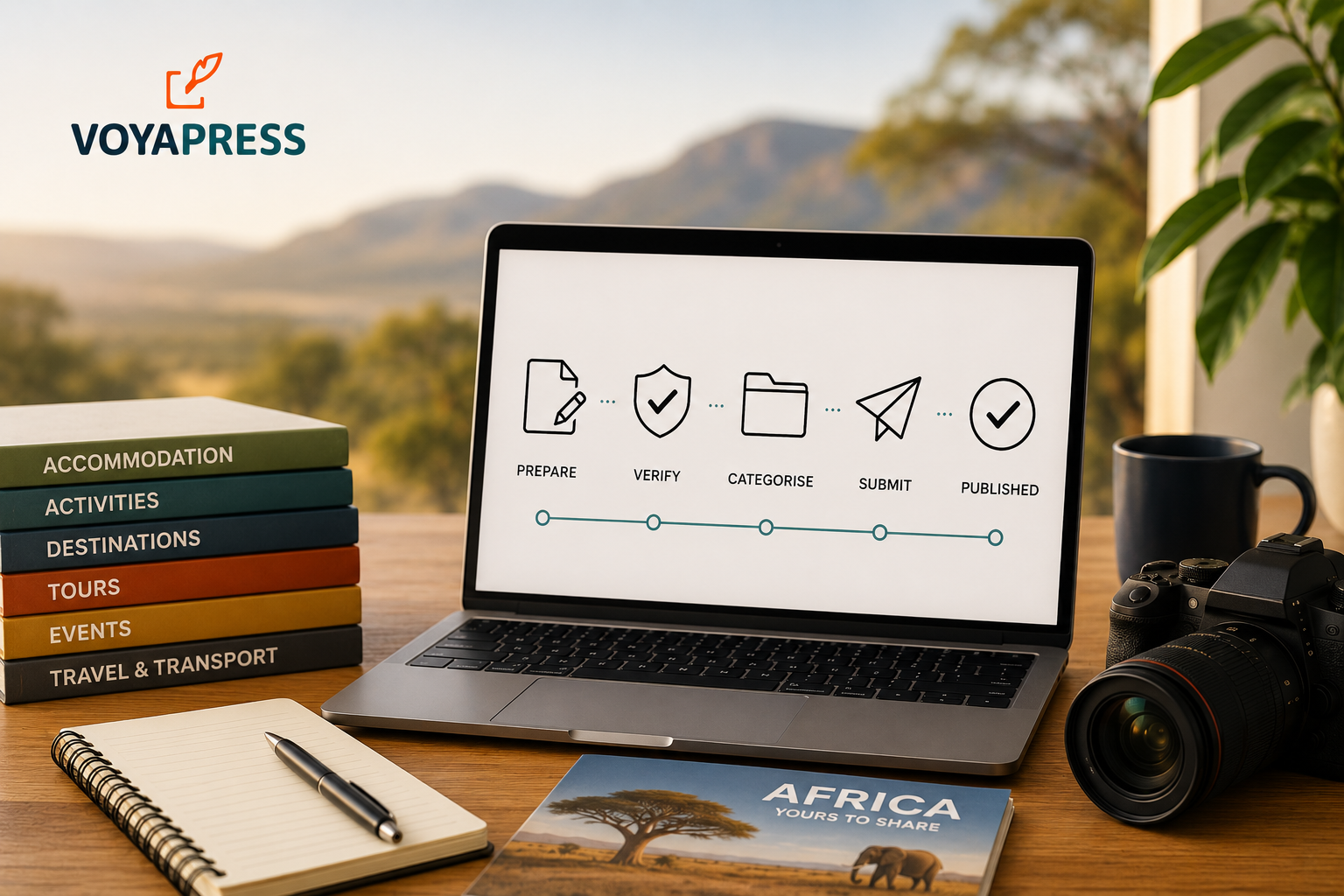
Accuracy is non-negotiable in tourism communications. Before you submit news, every claim must be verified. This includes checking dates, prices, location details, and the spelling of names. Inaccurate information can lead to operational confusion for travel agents or DMCs who might rely on your announcement to plan itineraries or book services for their clients.
Professional publishing platforms often maintain strict internal standards to uphold the integrity of the news they host. At VoyaPress, these standards are clearly defined through several public-facing documents. These policies are designed to support a transparent publishing process and ensure that all submitted information is handled with care. You should familiarize yourself with these standards:
- Editorial Guidelines for content quality.
- Fact-checking Policy for verifying information.
- Corrections Policy for handling errors.
- AI Disclosure Policy regarding generated content.
By adhering to these standards, a business demonstrates its commitment to professional communication. This is especially important when sharing sensitive information such as destination updates or significant operational changes that impact the wider travel ecosystem.
Where can you submit tourism news in Africa?
For businesses operating in South Africa, Southern Africa, and East Africa, there are several avenues for news distribution. Regional tourism media often look for stories with local impact, while international trade publications focus on broader market trends. However, for many businesses, a specialist publishing route provides the most direct way to get an announcement into the public domain.
Platforms dedicated to the African travel sector allow for categorised submissions. This means a hotel can place its news in the Accommodation section, while a safari operator might choose Activities . This structure helps ensure that the news is discoverable by those specifically interested in those sectors. It also provides a professional record that can be linked to from company newsletters or social media profiles.
Best practices for tourism media submissions
To increase the professionalism of your news submission, follow established best practices used by PR agencies and marketing professionals. These steps help ensure your content is ready for publication and useful to the travel trade. High-quality imagery and clear contact information are often as important as the text itself in providing a complete picture of your announcement.
Follow these guidelines for professional submissions:
- Include high-resolution images with descriptive alt text.
- Provide a clear media contact email and phone number.
- Ensure all links to external sites are functional and relevant.
- State clearly if the submission is for Free Press Release Submission or a paid option.
- Categorise the news accurately (e.g., Destinations or Events ).
By following these steps, you provide a complete package that requires minimal revision from publishing teams. This efficiency is valued across the industry and helps maintain a steady flow of information between tourism businesses and their various stakeholders.
Strategic selection of publishing categories
Selecting the right category is vital for context. A product launch for a new luxury tented camp belongs under Accommodation, whereas a new regional flight path should be under Travel & Transport . This categorization allows readers to filter for the specific news that impacts their business operations. It also helps internal site organization, making it easier for users to browse relevant history and updates within specific sub-sectors of the industry.
In the African context, where tourism is a primary economic driver, having a dedicated place for these updates supports the visibility of regional developments. Whether it is an update on a new Tours itinerary in East Africa or a major industry event in South Africa, the right category placement ensures the news is accessible to the right people at the right time.
Conclusion: How to effectively share tourism developments
Submitting tourism news is a critical task for businesses wanting to maintain a public record of their growth and operational changes. By distinguishing between editorial pitching and direct publishing, preparing factual releases, and adhering to professional standards, you can ensure your news reaches the travel trade and media effectively. Whether using free submission routes or strategic distribution, the goal is to provide clear, verified, and well-categorized information that serves the wider tourism industry.
Key Takeaways for Tourism News Submission:
- Choose the right route: Decide between pitching for editorial coverage or using direct publishing platforms.
- Maintain factual integrity: Always verify dates, prices, and locations before submitting.
- Follow professional standards: Adhere to editorial and fact-checking policies to ensure credibility.
- Use clear categories: Place your news in specific sections like Accommodation or Travel & Transport for better context.
- Prepare a full media kit: Include high-quality images and contact details with every submission.
Publish your next tourism announcement on VoyaPress and create a relevant external article that links back to your most important page.

Stay Informed
Get the latest VoyaPress tourism news delivered to your inbox
VoyaPress Newsletter Signup
Thank You For Signing Up.
Keep and Eye on Your Inbox
Please try again later.
Latest Posts