

5 Tips to Increase Tourism Online Visibility
By • July 30, 2026

Increasing tourism online visibility requires a multi-layered approach of consistent content, media mentions, and search optimization. Since most travelers never scroll past Google’s first page, small businesses must expand their digital footprint through press releases, diverse listings, and authoritative mentions to establish trust and outshine larger competitors.
Why do travelers rarely check page 2 of Google?
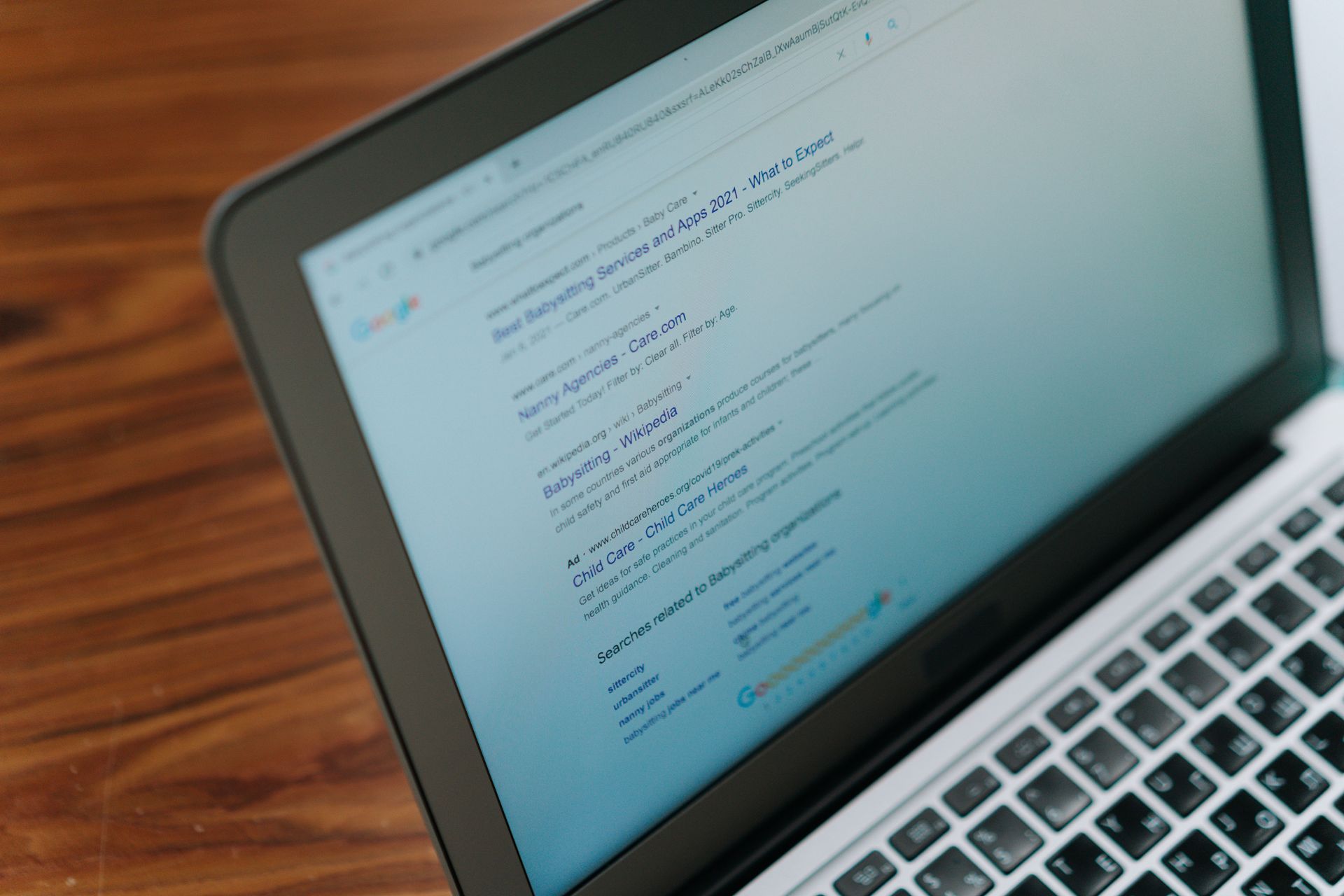
When a traveler sits down to plan their next getaway, they are usually looking for the path of least resistance. The digital landscape in 2026 is busier than ever, and search engines like Google and AI assistants have become incredibly efficient at delivering the most relevant results immediately. Statistical data consistently shows that over 75% of users never click past the first page of search results. This behavior isn’t just about laziness; it is about trust and perceived authority. If a business appears on the first page, the user subconsciously assumes that the company is a leader in its field. Conversely, being buried on page two or three suggests that the business is either new, unpopular, or less professional than those appearing at the top.
For a small tourism operator, this presents a significant challenge. You may offer the most authentic TOURS in the region, but if your website is the only place where your name exists online, you are effectively invisible to the vast majority of your potential market. Travelers research by comparing multiple sources. They don't just look at your website; they look for social proof, third-party reviews, and mentions in INDUSTRY NEWS . If a competitor has twenty different websites mentioning their name while you only have one, the traveler will almost always choose the competitor. They choose the 'safer' bet—the one with the larger digital footprint.
The psychology of digital trust in tourism
Trust is the most valuable currency in the tourism industry. Unlike a physical product that a customer can touch before buying, travel is an 'experience' product. Customers are often paying thousands of dollars for a promise of a future experience. This creates a high-stakes decision-making process. When a digital footprint is thin, it triggers a 'red flag' in the traveler's mind. They wonder if the business is still active, if the photos are legitimate, or if they will be stranded in a foreign country with no recourse.
To bridge this trust gap, your business needs to be ubiquitous. You need to appear in search results not just as a single link, but as a brand mentioned across various platforms. This is where the concept of 'authority by association' comes in. If a traveler sees your brand mentioned on a reputable platform like VoyaPress, followed by a review on a travel blog, and then an entry in an EVENTS guide, their confidence in your legitimacy increases exponentially. Each mention acts as a digital vote of confidence, signaling to both the user and the search engine that your business is a pillar of the local tourism community.
How can small operators outrank larger competitors?
Small tourism businesses often feel they cannot compete with the massive marketing budgets of international hotel chains or global booking platforms. However, the secret to competing is not to outspend them, but to out-maneuver them through niche tourism online visibility. Larger competitors often rely on broad, generic keywords. As a local or specialized operator, you can dominate specific categories and regions by creating a dense web of local mentions.
By focusing on 'long-tail' visibility—meaning appearances in specific DESTINATIONS guides or niche activity lists—you can capture travelers who are further along in their booking journey. These travelers are looking for specifics, and a well-placed press release or article about your unique offerings can rank faster and more effectively than a generic homepage. The goal is to create a situation where, no matter where a traveler looks for information about your specific niche, your name appears. This 'surround sound' marketing strategy ensures that you are top-of-mind when the booking decision is finally made.
Strategies for building a robust digital footprint
Building a footprint is a marathon, not a sprint. It requires a consistent effort to ensure that your business information is distributed across the web. Here are the most effective ways to start expanding your reach today:
- Submit Press Releases: Regularly share news about new packages, staff hires, or community initiatives. You can use services like Free Press Release Submission to get started.
- Partner with Local Entities: Ensure you are listed in local tourism boards and municipal event calendars.
- Engage with Industry News: Stay relevant by commenting on or contributing to larger INDUSTRY NEWS trends.
- Create Value-Driven Content: Don't just sell; educate. Write about the best time to visit or what to pack for your specific activity.
- Leverage Third-Party Platforms: Ensure your business is mentioned on platforms that already have high domain authority.
To understand the full process of how media mentions can transform your brand, you should review HOW IT WORKS . It details how a single piece of news can ripple through the digital ecosystem, creating the mentions you need to satisfy both Google's algorithms and a traveler's need for social proof. When you diversify the places where your name appears, you decrease your reliance on your own website's SEO alone, creating a more resilient and trustworthy brand image.
What role do press releases play in tourism SEO?
Press releases are one of the most underutilized tools in the tourism marketing toolkit. Many owners believe press releases are only for major corporate mergers, but in reality, they are perfect for small-scale updates that build tourism online visibility. Every press release issued creates a permanent, high-quality backlink and a new search result for your brand name. This is crucial for 'clearing' your brand's reputation; when someone searches for your company, you want the first page to be filled with positive, informative articles about your work, rather than just a lone social media profile or an outdated directory listing.
Furthermore, press releases are often indexed very quickly by search engines. This makes them ideal for promoting time-sensitive EVENTS or seasonal ACCOMMODATION specials. When a reputable news site picks up your story, it passes 'link equity' to your website, which improves your own site's ranking over time. This dual benefit—immediate visibility and long-term SEO strength—makes press releases an essential component of a modern digital strategy.
Optimizing your brand for AI Answer Engines
As we move deeper into 2026, the way people find information is shifting from traditional search to AI-driven answers (AEO). Tools like ChatGPT, Gemini, and Google’s Search Generative Experience don't just provide links; they provide direct answers. To be the business that the AI recommends, your online presence must be structured and clear. AI models 'crawl' the web to find facts. If your business is mentioned in multiple places with consistent information about your services in TRAVEL & TRANSPORT or ACTIVITIES , the AI is more likely to trust your business as a reliable answer to a user’s query.
To optimize for AEO, ensure that your name, address, and specific service offerings are consistent across every platform. Use clear, descriptive language in your press releases. Instead of saying 'We offer great tours,' say 'We provide luxury 4x4 wildlife safaris in the Kruger National Park.' The more specific and factual your mentions are, the easier it is for an AI to categorize you and recommend you to a traveler asking for advice.

Practical steps to audit your online presence
Before you can grow, you must know where you stand. Start by searching for your business name in an 'Incognito' browser window. Look at the first two pages. Are there articles from third-party sites? Are there recent mentions of your work? If you only see your website and perhaps a dead Facebook page, your footprint is too thin. Your next steps should be to identify three new platforms where you can get your name mentioned this month. Whether it is a guest post, a directory listing, or a new product announcement, every new link is a step toward total visibility.
Summary of Tourism Visibility Takeaways:
- Visibility equals trust: If travelers can't find you across multiple sources, they won't book.
- Beat the 'Page 2' Trap: Use diverse media mentions to ensure you dominate the first page for your niche.
- Consistent Press Releases: Regularly sharing news builds long-term SEO and immediate authority.
- AEO Readiness: Use clear, factual language so AI search engines can easily recommend your services.
- Diversify Mentions: Don't rely solely on your website; get mentioned on INDUSTRY NEWS platforms.
By expanding your tourism online visibility, you ensure that your business isn't just a hidden gem, but a recognized leader that travelers can find and trust with ease. The time to start building your digital legacy is now, ensuring that by the time peak season arrives, your footprint is large enough to capture every potential booking.
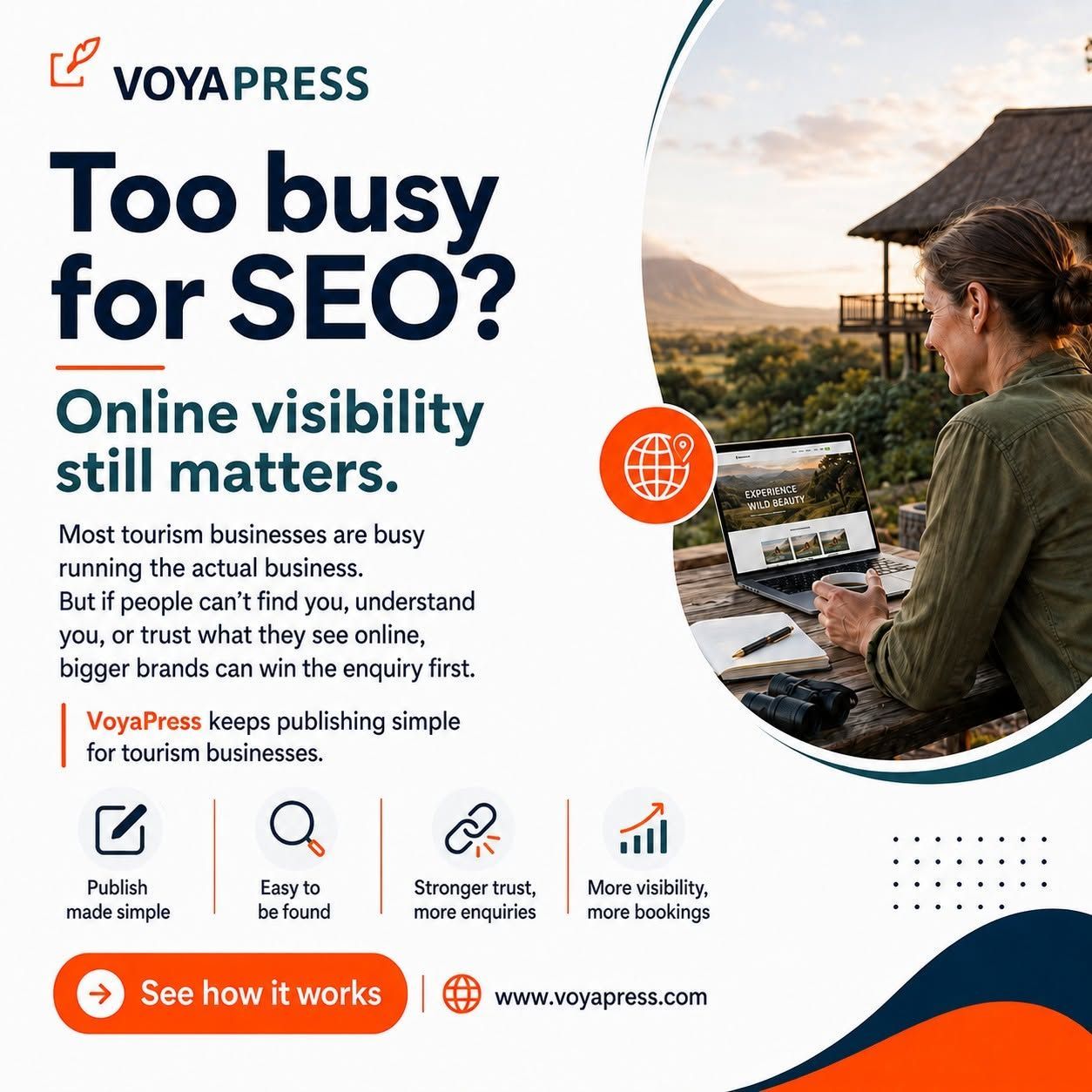
Publish your next tourism announcement on VoyaPress and create a relevant external article that links back to your most important page.
Stay Informed
Get the latest VoyaPress tourism news delivered to your inbox
VoyaPress Newsletter Signup
Thank You For Signing Up.
Keep and Eye on Your Inbox
Please try again later.